Understanding the Television Landscape in 2026
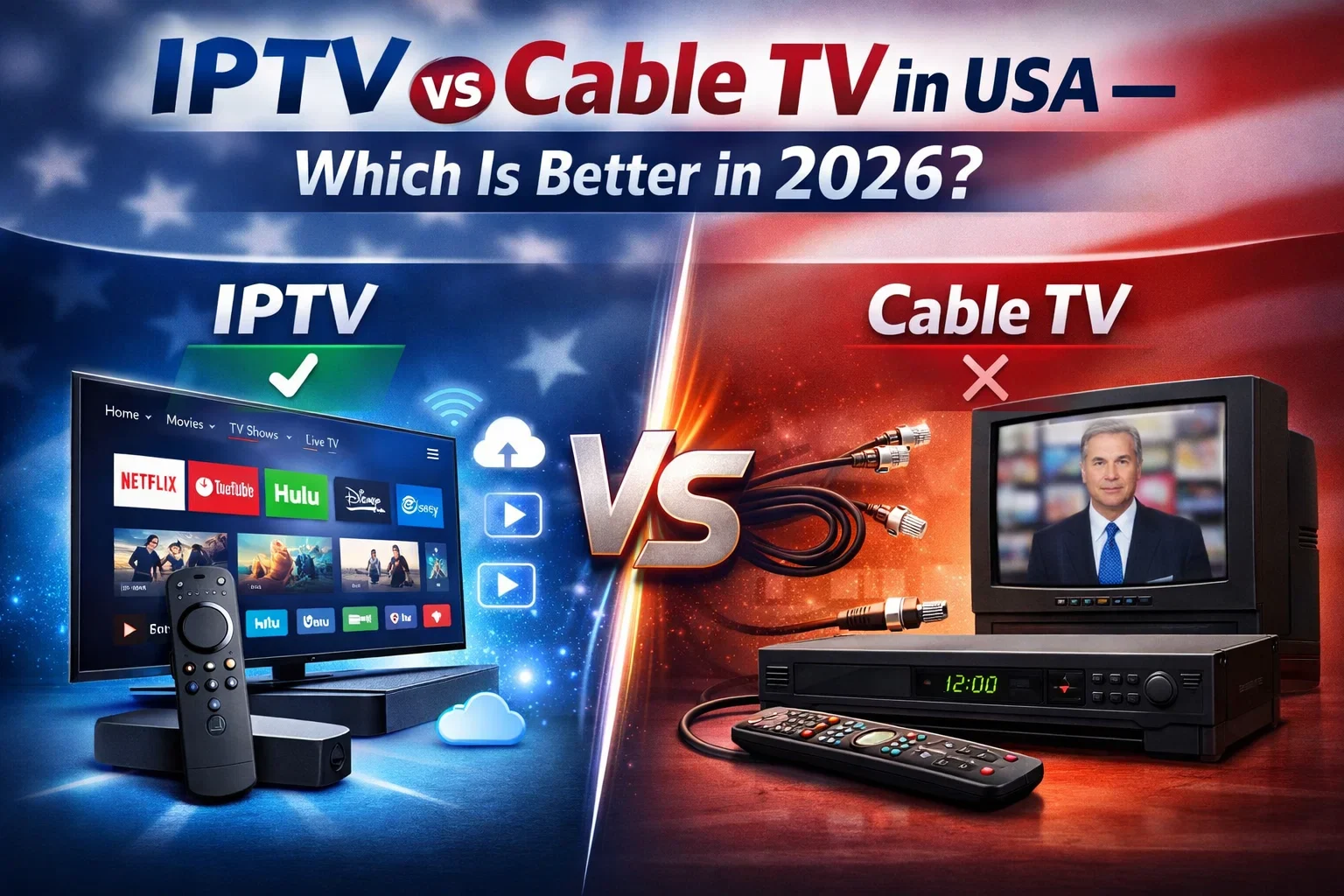
The way Americans consume television content has undergone a dramatic transformation over the past decade. As we navigate through 2026, the debate between IPTV vs cable TV USA continues to intensify, with millions of households reconsidering their entertainment choices. Traditional cable television, once the undisputed king of home entertainment, now faces fierce competition from Internet Protocol Television (IPTV) services that offer unprecedented flexibility, affordability, and content variety. IPTV vs Cable TV.
This comprehensive guide will explore every aspect of the IPTV vs cable comparison to help you make an informed decision about which service best suits your viewing habits, budget, and lifestyle. Whether you’re a cord-cutter considering the switch or simply exploring your options, understanding the fundamental differences between these two technologies is crucial for optimizing your entertainment experience in 2026.
What Makes IPTV Different from Traditional Cable Television?
To understand whether is IPTV better than cable, we must first examine how these technologies fundamentally differ in their delivery methods and infrastructure. Cable television relies on coaxial or fiber-optic cables to transmit broadcast signals directly to your television set through a physical connection. This traditional method has served households for decades but comes with inherent limitations in flexibility and scalability.
The technology behind IPTV allows for a more personalized and interactive viewing experience. According to a recent industry report from Statista, IPTV subscribers worldwide have surpassed 340 million users in 2025, demonstrating the rapid adoption of this streaming television technology.
Cost Comparison: Breaking Down the Financial Reality
One of the most compelling IPTV advantages over cable centers on pricing transparency and overall affordability. Traditional cable TV packages in the USA typically range from $80 to $150 monthly, with premium channel bundles pushing costs even higher. These prices often include hidden fees, equipment rental charges, regional sports surcharges, and mandatory service packages containing channels you never watch.
An IPTV subscription presents a dramatically different cost structure. Premium IPTV providers typically offer comprehensive channel packages ranging from $10 to $40 monthly, representing potential savings of 60-80% compared to traditional cable services. These packages often include thousands of channels, video-on-demand libraries, and international content without the punitive pricing tiers common in cable television.
Hidden Costs and Fee Structures
Cable television companies notoriously burden subscribers with additional fees that inflate monthly bills beyond advertised rates. Installation fees commonly reach $50-100, equipment rental for cable boxes averages $10-20 per device monthly, and broadcast TV fees add another $15-30 to your bill. Regional sports fees, early termination penalties, and service call charges further compound these expenses.
Content Variety and Channel Selection
The iptv vs cable comparison reveals stark differences in content availability and diversity. Traditional cable packages force consumers into rigid tier structures—basic, standard, premium—with limited customization options. Want HBO? You’ll need the premium package. Interested in international channels? That requires an expensive specialty add-on.
Quality IPTV services provide access to thousands of live channels spanning all genres, including entertainment, sports, news, documentaries, and international programming from dozens of countries. A comprehensive IPTV platform typically includes 10,000+ live TV channels, extensive video-on-demand libraries with tens of thousands of movies and series, catch-up TV functionality, and electronic program guides that rival or exceed cable offerings. IPTV vs Cable TV.
For sports enthusiasts, the comparison becomes even more favorable for IPTV. While cable requires expensive sports packages to access comprehensive coverage, many IPTV services for sports include extensive sports channels covering NFL, NBA, MLB, NHL, soccer, MMA, boxing, and international competitions—all within standard subscription pricing.
Picture and Audio Quality in 2026
The streaming quality comparison between cable TV and IPTV has evolved significantly. Traditional cable television maxes out at 1080p HD for most channels, with select premium content available in 4K resolution. However, cable’s broadcast nature means you’re receiving the same quality stream as millions of other viewers, regardless of your display capabilities or preferences. IPTV vs Cable TV.
Leading IPTV providers now offer adaptive streaming technology that adjusts quality based on your internet bandwidth, with support for HD, Full HD, 4K, and even 8K resolution content. According to Cisco’s Annual Internet Report, global internet speeds continue increasing, with median broadband speeds now exceeding 100 Mbps in major US metropolitan areas—more than sufficient for 4K IPTV streaming. IPTV vs Cable TV.
Premium services like NikoTV offer 8K quality streams, positioning themselves at the forefront of television technology. This quality level surpasses anything traditional cable can deliver through conventional infrastructure, making IPTV the superior choice for viewers with high-end displays and home theater systems. IPTV vs Cable TV.
Device Compatibility and Viewing Flexibility
Perhaps the most significant advantage in the modern iptv vs cable tv usa debate centers on viewing flexibility. Cable television restricts you to watching content on televisions connected to cable boxes in your home. Want to watch in another room? You’ll need another cable box and pay an additional monthly fee. Traveling? You’re completely disconnected from your content.
IPTV services provide unprecedented device compatibility and viewing freedom. Most quality IPTV subscriptions support simultaneous streaming on multiple devices, allowing family members to watch different content on smart TVs, smartphones, tablets, computers, and streaming devices like Amazon Firestick, Apple TV, Roku, and Android TV boxes.
Geographic Freedom and International Access
Cable television binds you to a physical location—your home address. IPTV services operate wherever you have internet connectivity, enabling you to access your subscription while traveling domestically or internationally. This geographic freedom proves invaluable for frequent travelers, business professionals, students studying abroad, or anyone who splits time between multiple residences.
For expatriates and immigrant communities, IPTV provides access to content from their home countries that cable television cannot economically deliver. A single IPTV subscription often includes channels from dozens of countries, supporting multiple languages and cultural programming that traditional cable services would charge premium rates to access—if they offer them at all. IPTV vs Cable TV.
Reliability and Service Interruptions
Critics of IPTV often cite reliability concerns, arguing that cable television’s dedicated infrastructure provides more stable service. While this perception held some truth in earlier years, the reality in 2026 presents a more nuanced picture. Cable television remains vulnerable to physical infrastructure damage from weather events, equipment failures, and regional outages affecting entire service areas.
According to the FCC’s latest broadband report, major US internet service providers now achieve 95%+ consistency in delivering advertised speeds, creating a stable foundation for IPTV streaming. Additionally, reliable IPTV providers offer 99.9% uptime guarantees that match or exceed cable television service level agreements. IPTV vs Cable TV.
Installation and Setup Process
The installation comparison heavily favors IPTV services. Cable television requires scheduling appointments with technicians, drilling holes, running cables through walls, installing junction boxes, and configuring proprietary equipment. This process typically involves taking time off work, waiting in multi-hour appointment windows, and paying installation fees ranging from $50-150. IPTV vs Cable TV.
IPTV installation is remarkably simple by comparison. After purchasing your subscription, you download the provider’s app on your preferred device, enter your login credentials, and begin watching immediately. The entire setup process typically takes less than five minutes and requires no technical expertise, drilling, or professional assistance. This simplicity extends to adding additional viewing devices—simply install the app and log in. IPTV vs Cable TV.
Customer Service and Contract Flexibility
Cable companies have earned notorious reputations for poor customer service, lengthy hold times, and frustrating support experiences. Their business model traditionally relied on regional monopolies and long-term contracts with significant early termination penalties, creating little incentive for responsive customer support.
Legal Considerations for IPTV in the United States
A critical aspect of the iptv vs cable comparison involves legal considerations. Cable television operates under clearly established regulatory frameworks, with licensed providers operating transparently within legal boundaries. The IPTV landscape is more complex, with both legitimate licensed services and questionable providers operating in regulatory gray areas. IPTV vs Cable TV.
Consumers should understand that IPTV legality depends entirely on the provider’s licensing and content sourcing. Legitimate IPTV services obtain proper content licensing agreements and operate within legal frameworks, while unlicensed services potentially expose users to copyright infringement risks. When evaluating IPTV options, verify that providers maintain transparent business practices, clearly state their licensing arrangements, and operate through established business entities.
The Verdict: Which Service Wins in 2026?
Evaluating whether is IPTV better than cable requires considering your specific circumstances, priorities, and viewing habits. For most American households in 2026, IPTV services present compelling advantages across nearly every comparison metric—cost savings of 60-80%, vastly superior content variety, exceptional viewing flexibility, better picture quality options, and elimination of restrictive contracts. IPTV vs Cable TV.
The data clearly demonstrates that IPTV advantages over cable extend beyond simple cost savings. The technology represents a fundamental improvement in how television content is delivered, consumed, and experienced. For cord-cutters seeking maximum value, content variety, and viewing flexibility, quality IPTV subscriptions provide superior solutions compared to traditional cable television. IPTV vs Cable TV.
Making Your Decision and Next Steps
If you’ve determined that IPTV aligns better with your entertainment needs and budget, the transition process is remarkably straightforward. Begin by evaluating your internet connection speed—most IPTV providers recommend minimum speeds of 10 Mbps for HD streaming and 25+ Mbps for 4K content. Test your current speeds using online speed test tools to ensure compatibility. IPTV vs Cable TV.
Consider your household’s viewing patterns—how many simultaneous streams do you need? What content genres matter most? Do you require international programming? These questions will help identify providers offering optimal packages for your specific requirements. IPTV vs Cable TV.
FAQs
❓ Is IPTV better than cable TV in the USA?
Yes, IPTV is often better than cable TV in the USA because it offers more channels, lower monthly costs, and greater flexibility for streaming on multiple devices.
❓ Is IPTV cheaper than cable TV in 2026?
In most cases, IPTV is significantly cheaper than cable TV. IPTV plans usually cost less and do not require long-term contracts or expensive equipment.
❓ Does IPTV offer more channels than cable TV?
Yes, IPTV services typically provide access to thousands of local and international channels, while cable TV offers a more limited selection.
❓ Is IPTV legal in the USA?
IPTV itself is legal in the USA, but legality depends on the service provider. Licensed IPTV services are legal, while unlicensed services may violate copyright laws. IPTV vs Cable TV.
Conclusion
The television landscape of 2026 offers consumers unprecedented choice in how they access entertainment content. The iptv vs cable tv usa comparison reveals that Internet Protocol Television has matured into a superior alternative for most American households, offering dramatic cost savings, vastly expanded content libraries, exceptional viewing flexibility, and cutting-edge quality standards that traditional cable cannot match.
For the majority of viewers evaluating their entertainment options in 2026, the question is no longer whether IPTV is better than cable, but rather which IPTV service best meets their specific needs. By understanding the fundamental differences explored in this comprehensive comparison, you’re now equipped to make an informed decision that optimizes your viewing experience while respecting your budget constraints. IPTV vs Cable TV.
Experience the Future of Television Today
Ready to discover why millions of Americans have made the switch from expensive cable packages to affordable, feature-rich IPTV services? Don’t take our word for it—experience the difference firsthand without any financial risk. Test drive a premium IPTV service to explore the extensive channel selection, superior picture quality, and exceptional viewing flexibility that’s revolutionizing home entertainment.
Get your free 24h trial and see for yourself how IPTV delivers more content, better quality, and greater value than traditional cable television—all at a fraction of the cost. Join the cord-cutting revolution and take control of your entertainment experience today. IPTV vs Cable TV.